

Last year I spent eight months inside Volkswagen in the UK. Not the glamorous EV showrooms you see in commercials, but the commercial vehicle wing—the dusty backrooms where strategy documents stack higher than the ambition inside them. And yet even there, among the spreadsheets and the whiteboards, the conversations weren’t about vans. They were about the future. About how VW could reinvent itself with new business models. About how ownership was evolving into access, and how a company once known as the invantor of the “people’s car” could lead consumers into a new age of mobility.
It wasn’t a bad dream. It wasn’t even a bad idea. The world is moving in that direction. Consumers don’t just buy anymore, they subscribe, they rent, they flex between experiences. So yes, we spoke about access models, about creating something closer to Amazon Prime than a dealership handshake, about turning the car into a node in a digital life rather than just an object sitting in a driveway. That kind of innovation makes sense. That is napkin-simple.
But somewhere between the boardrooms of Wolfsburg and the showrooms of London, Volkswagen lost the plot. Or maybe they sold it. The latest stroke of genius? Offering you the privilege of subscribing to unlock extra horsepower in a car you already bought and already own. Sixteen pounds fifty a month, or six-hundred-odd quid upfront, to release the engine’s full potential. A car you’ve financed, insured, and parked in your driveway now greets you with a ransom note: pay again, or stay slow.
Let’s be clear. Subscriptions, when they give you more, can be liberation. Netflix gave you thousands of movies instead of one DVD at a time. Spotify gave you every song you forgot existed. That’s access-ship, not ownership, and it works when the value expands. But Volkswagen isn’t offering access. They’re selling back what you already bought. That’s not access-ship, that’s debt-ship. Worse, it’s servitude dressed up in the costume of innovation.
Nobody buys a car dreaming of its subscription packages. They buy it for freedom—the snap of acceleration, the hum of the engine, the illusion that for a few hours the road belongs to you. Volkswagen has taken that feeling, shoved it into a billing system, and told you to keep paying if you want to keep feeling alive. Ownership, once a declaration of independence, is now probation.
And let’s not pretend this came from some inspired vision of the future. I can practically picture the meeting. The KPI leans back, fat and smug, declaring revenue per user is stagnant. The Subscription, dressed in PowerPoint slides, whispers, “What if they buy the car, but not really? We sell them the potential, but drip-feed the reality.” The Horsepower Upgrade, polishing its cufflinks, adds: “We’ll be like Netflix for speed.” Meanwhile the customer sits quietly in the corner, wondering why their signature on a finance agreement wasn’t enough.
This is not innovation. This is extortion.
A SHORT HISTORY OF THE “PEOPLE’S CAR”
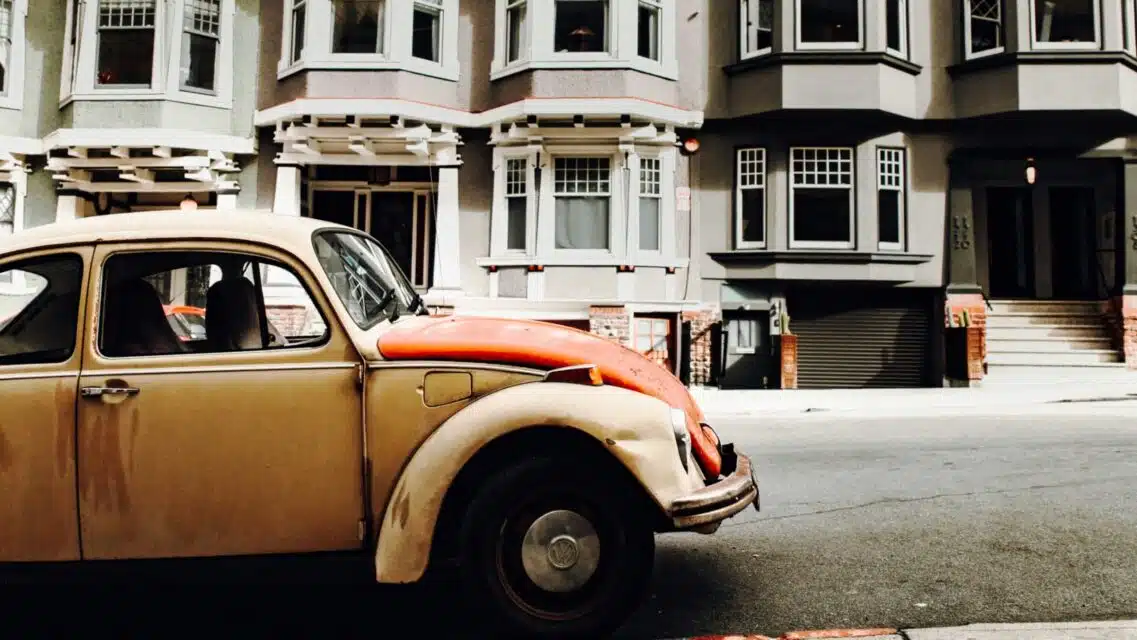
The insult cuts deeper because of where VW came from. The Beetle wasn’t just a car—it was a manifesto on wheels. Simple, affordable, democratic. It turned mobility into something ordinary people could access. It became the second heartbeat of the working class, buzzing through postwar Europe and across oceans.
Then came the Golf, the car that defined practicality. And later, the GTI, which democratized performance. VW’s genius wasn’t in being premium—it was in making the extraordinary ordinary. They gave students, workers, and families a taste of speed, design, and reliability without silver-spoon prices. The people’s car was about freedom, not about squeezing the last coin from your pocket.
Fast forward: Dieselgate. VW’s monumental scandal, when “clean diesel” turned out to be software trickery and corporate arrogance. Billions in fines. Trust obliterated. And yet, the brand had a chance to rebuild itself. EVs were the redemption arc. Sustainability, transparency, the chance to be bold and honest again.
But redemption requires humility. Instead, VW doubled down on manipulation—only now it’s aimed at consumers, not regulators. The subscription horsepower scam is just Dieselgate with better UX. It’s software trickery again, this time not to cheat emissions tests but to cheat drivers. Different sin, same arrogance.
THE PORSCHE TAKEOVER AND THE BRAND LOST IN THE DESERT
The drift from people to profit didn’t happen by accident. When the Porsche family tightened its grip on VW, the soul of the “people’s car” began to wither. VW no longer asked, What do drivers need? It asked, What can we charge them for?The vision shifted from utility to extraction.
Once, VW stood in the town square. Now, it stands in the boardroom desert, hallucinating about being a tech company. It wants to be Apple, but without Apple’s elegance. Netflix, but without the content. Amazon, but without the logistics. What’s left is a mirage: a brand chasing relevance but delivering ransom notes.
This isn’t premium. It isn’t innovative. It’s the slow death of identity—what happens when a brand forgets who it is and why it mattered in the first place.
WHY THIS SUBSCRIPTION DESTROYS TRUST
The horsepower subscription isn’t just bad—it’s radioactive.
First, it undermines ownership. You buy a product expecting it to be yours. When VW locks the power inside your own car and sells it back to you, they’re telling you: you don’t own this machine, you rent its soul. Consumers don’t forget that insult.
Second, it erodes fairness. Pay £649 and the upgrade stays with the car, not the owner. Which means if you sell the vehicle, the next driver reaps the benefit of what you paid for. That’s not a feature—that’s a slap.
Third, it signals contempt. VW isn’t solving a problem, they’re inventing one. Nobody asked for horsepower-on-demand. Nobody said, “Please, lock away my acceleration until I pay extra.” By manufacturing scarcity, they manufacture resentment.
And fourth, it revives the ghost of Dieselgate. VW promised honesty after lying to regulators. Now they lie again, just differently: pretending the subscription is “choice” when it’s really extortion. Every driver who lived through Dieselgate will see the pattern. Once you betray trust at that scale, every future betrayal cuts deeper.
This is why it matters more than a gimmick. It’s not just a pricing model. It’s a philosophical break with everything VW was supposed to stand for.
THE LOST BRAND
The people’s car is no longer the people’s. It has become a billing experiment in a desert of its own making. The Beetle democratized mobility. The Golf democratized quality. Even the GTI democratized speed. The subscription model does the opposite—it stratifies. It divides owners into those who pay extra and those who drive with the brakes half-pulled. It turns equality into hierarchy.
What VW once gave generously, it now withholds. What was once simplicity, it has wrapped in cleverness. What was once trust, it has traded for short-term revenue.
And here’s the cruel irony: the ideas sitting in VW’s own strategy documents—the Buzz Club, community-driven subscriptions, sustainability-driven services—could have been revolutionary. They could have built loyalty, created tribes, made VW more than a car company. Instead, the company chose to milk horsepower like a cash cow, oblivious to how pathetic it looks.
When brands lose clarity, they wander. VW today is a mirage-chaser in the desert: not premium enough to compete with Tesla, not cheap enough to be the true people’s car, not bold enough to reinvent mobility. Just a lost caravan of PowerPoints, hallucinating about subscriptions while drivers roll their eyes.
THE PHILOSOPHICAL PUNCHLINE
If it sounds like a press release, kill it. VW’s subscription pitch is nothing but marketing perfume on a rotting corpse of an idea.
Ownership mattered because it meant something. It meant freedom. It meant the road was yours, no caveats, no paywalls. Subscriptions mattered when they opened doors. But VW’s subscription closes them. It doesn’t liberate, it imprisons.
Volkswagen has become the emperor who charges you monthly to look at his nonexistent clothes. And when history writes this chapter, it won’t call it innovation. It’ll call it desperation—the moment the people’s car betrayed the people.